
Loading Experience0%
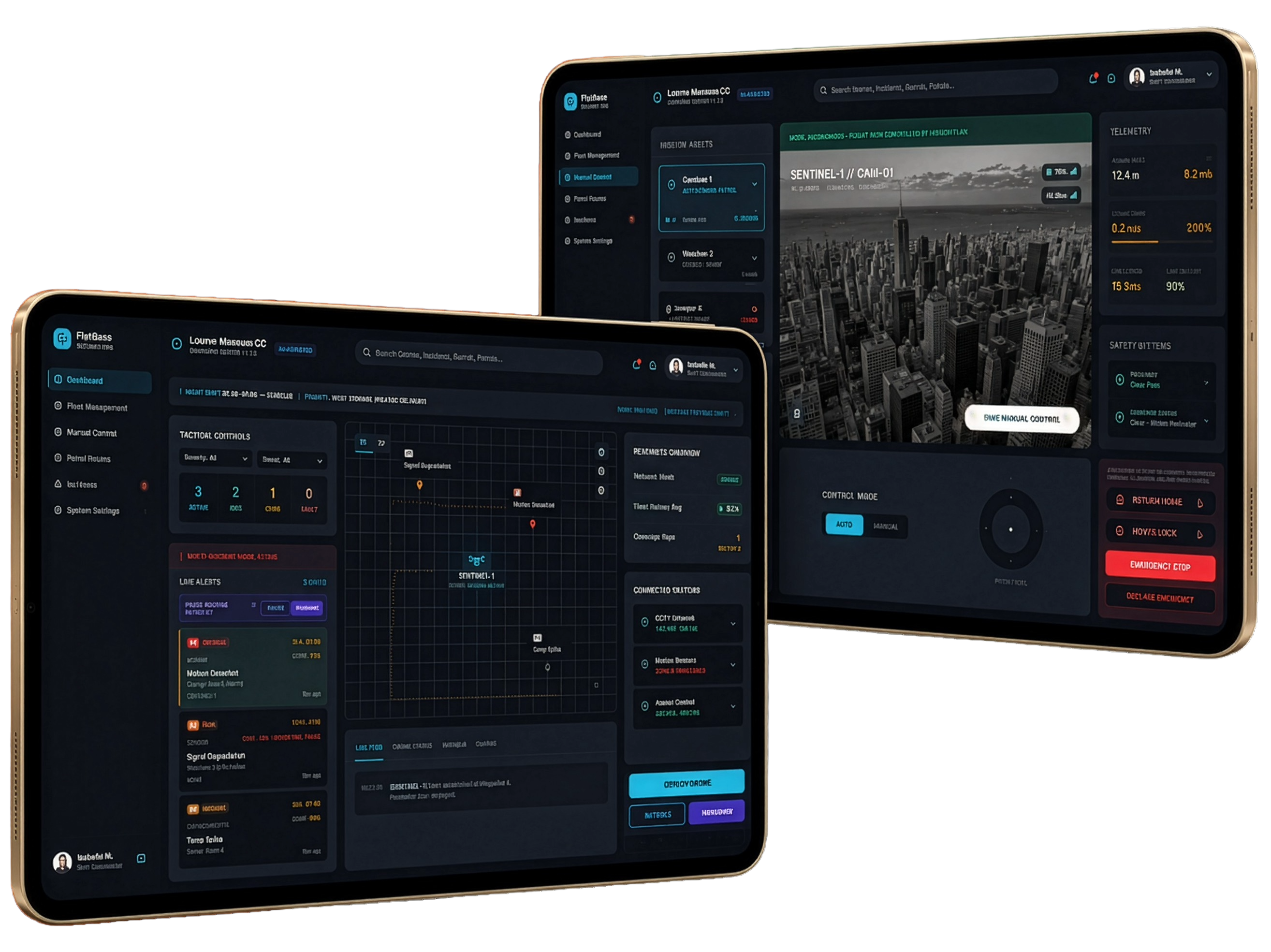
A unified command center for autonomous drone security operations — conceptualised for Le Musée d'Art Précieux, Paris.
Role
Product Designer
Team
Solo Designer
Timeline
48 hours
Tools
Figma, Eraser.io, Stitch, Google AI Studio
I conceptualised a unified command center for autonomous drone security operations at Le Musée d'Art Précieux in Paris — a high-fidelity product design challenge set by FlytBase.
The museum houses works valued at over €2 billion across 65,000 sqm. The goal was to enabling a team of 24 guards to manage 6 autonomous drones effectively.
AI confidence scoring cuts manual triage time from 45s to seconds.
Ranked P1/P2/P3 alerts with drone assignment suggestions.
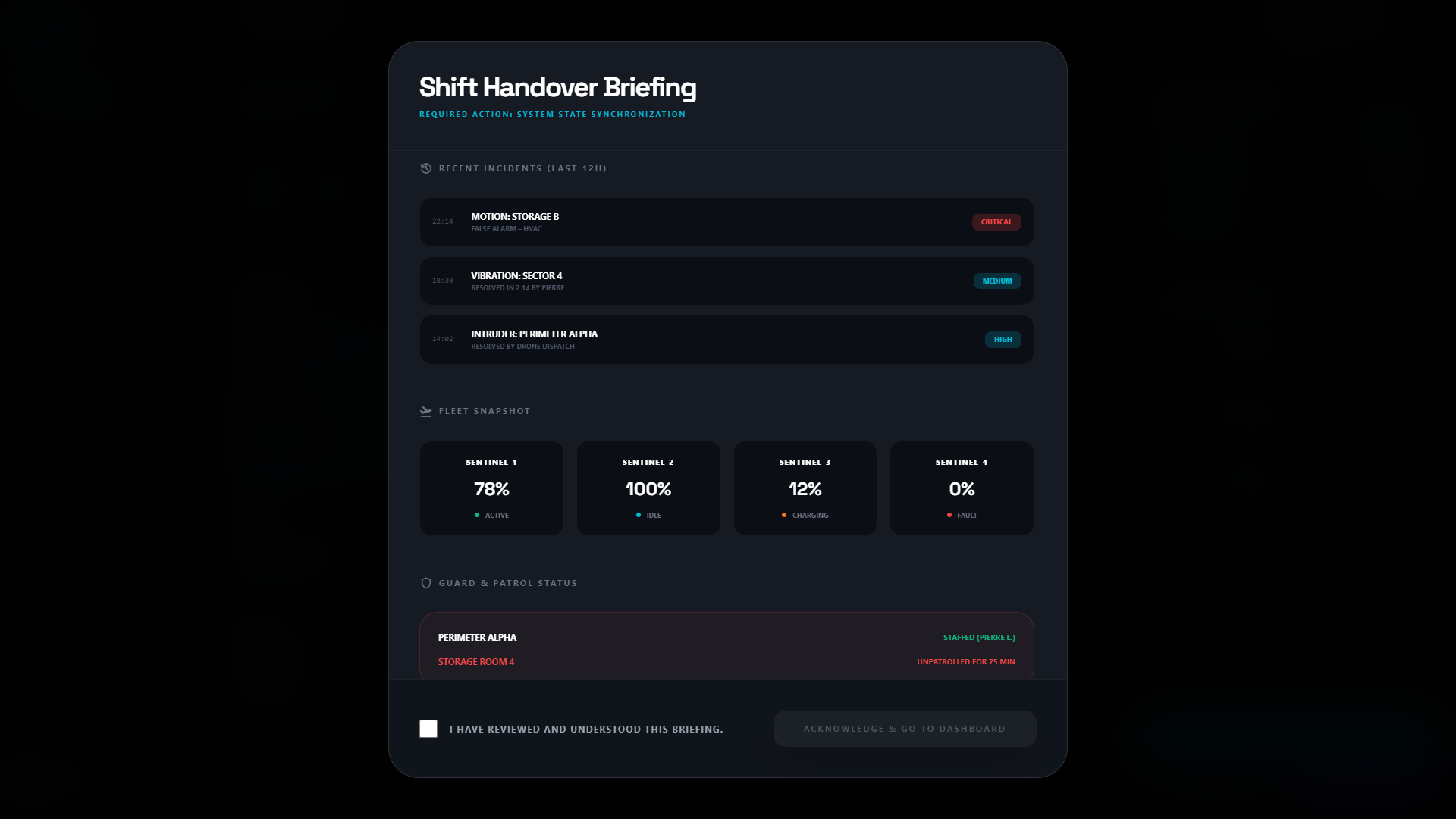
Mandatory shift briefings preserve institutional memory across rotations.
Security operators face catastrophic information overload from disconnected systems — CCTV, motion sensors, pressure sensors, and drone consoles — with no single source of truth.
"With 65,000 square metres and over 400 rooms, it's impossible to have eyes everywhere. We almost lost a Degas worth €30 million when sensors failed in the east wing."
Marc
Head of Security, Le Musée d'Art Précieux
Disconnected CCTV, motion sensors, and access-control systems create information silos — making it impossible for operators to form a coherent situational picture during active incidents.
150+
Global 2023
Attempted thefts
€30M
At Risk
Asset Value
45s
Lost Time
Manual Triage
24/7
Requirement
Operational
I mapped four distinct security stakeholders, each with specific cognitive requirements under pressure.
Security Director
Needs accountability, actionable clarity, and system-level performance data he can trust. Avoids UI noise.
Lead Drone Operator
Technically proficient and calm. Needs fast triage support and structured multi-incident flows.
Junior Security Analyst
Excels with tech but lacks experience. Needs AI confidence signals to escalate correctly.
Night Shift Supervisor
Coordinates field guards. Needs full situational context immediately at shift start.
Each alert card surfaces an AI Confidence Assessment — a percentage score, a root-cause hint, and sensor reliability context.
45s
Efficiency
Reduced to seconds
97%
Accuracy
False-positive rate
<8s
SLA
Response Target
When critical alerts fire simultaneously, the dashboard enters multi-incident mode — ranking incidents as P1, P2, P3.
AI analyses multi-sensor fusion inputs.
Autonomous route calculated in <3 seconds.
Nearest unit receives turn-by-turn navigation.
Thermal and logs packaged for audit.
I designed a mandatory Shift Briefing flow that ensures situational awareness is preserved across 24/7 rotations.
Briefing Modules
2–3m
Speed
Time to awareness
100%
Reliability
Context transfer
The command centre UI is built on a modular widget-based grid. We prioritize Live Camera Feed and Drone Telemetry.
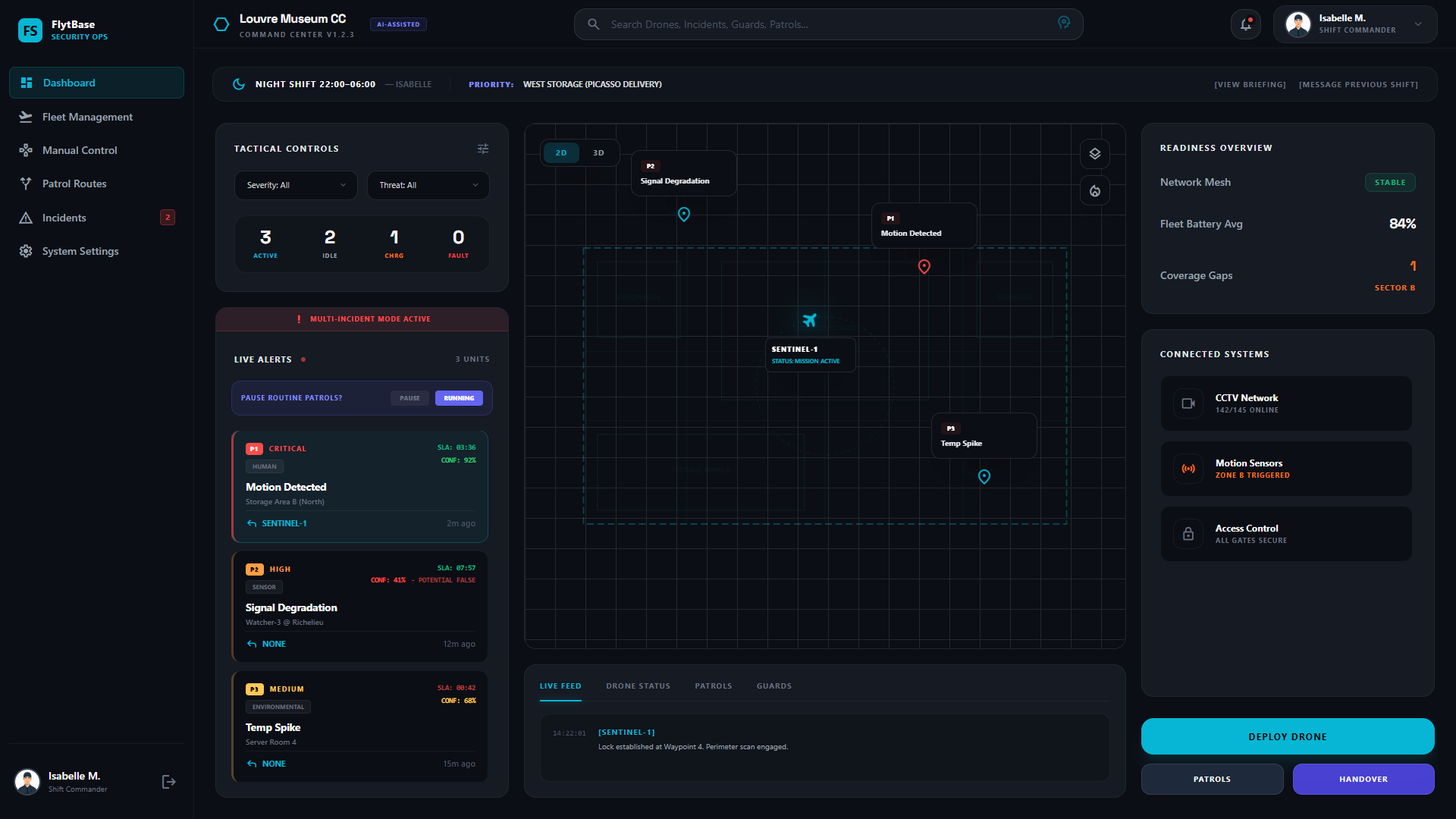
Live incidents & AI triage
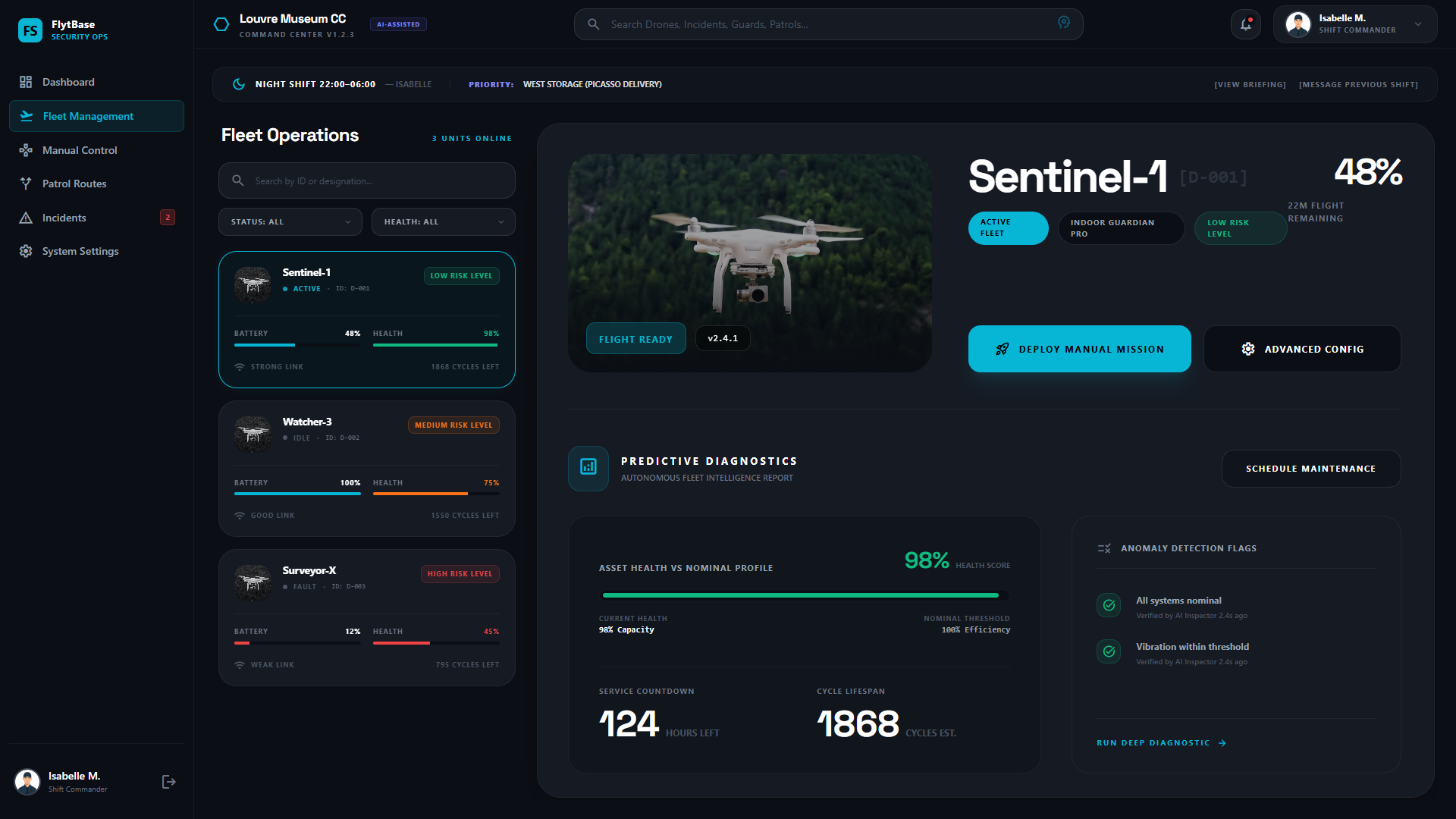
Drone health & docking
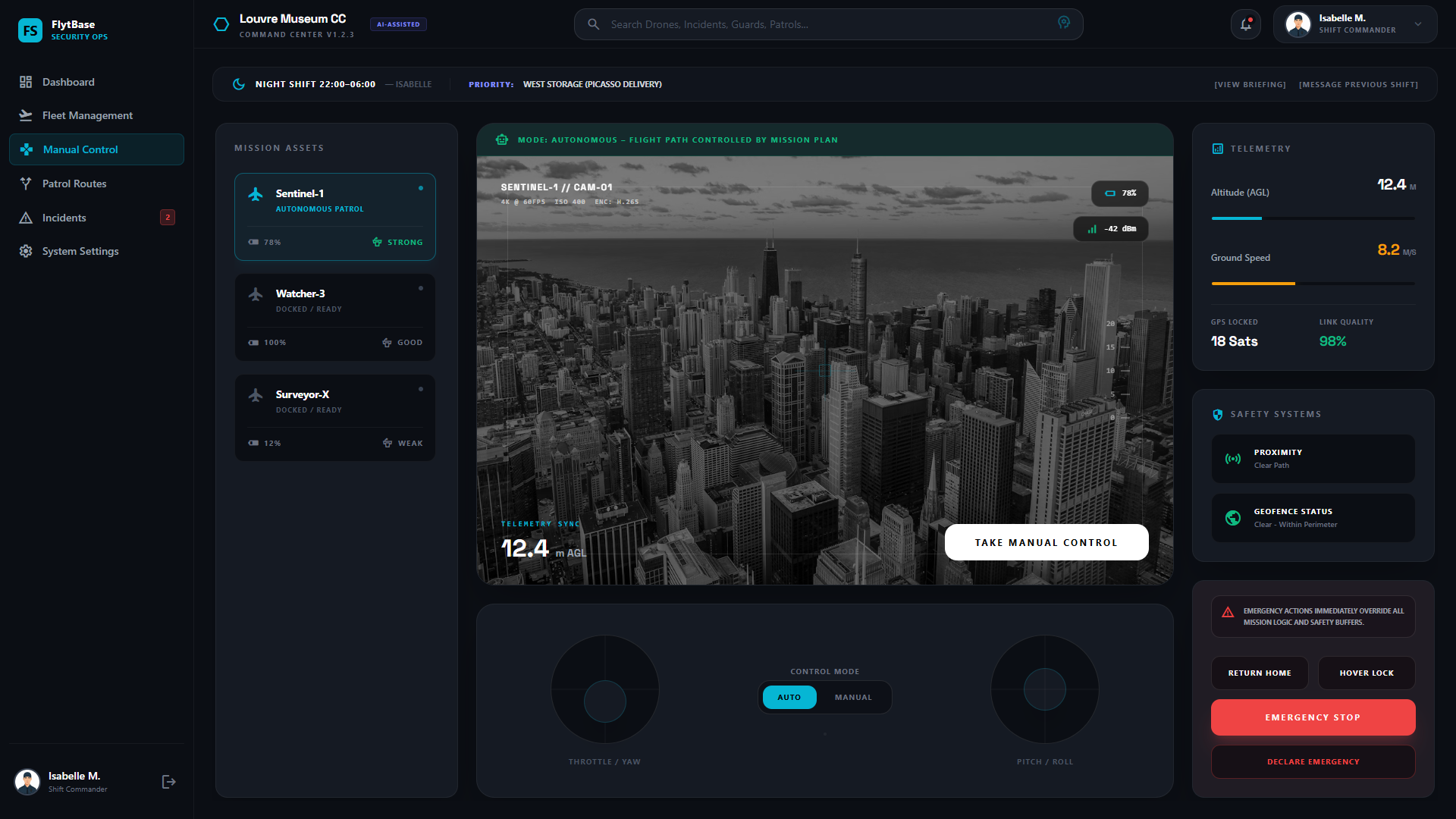
Direct piloting overrides
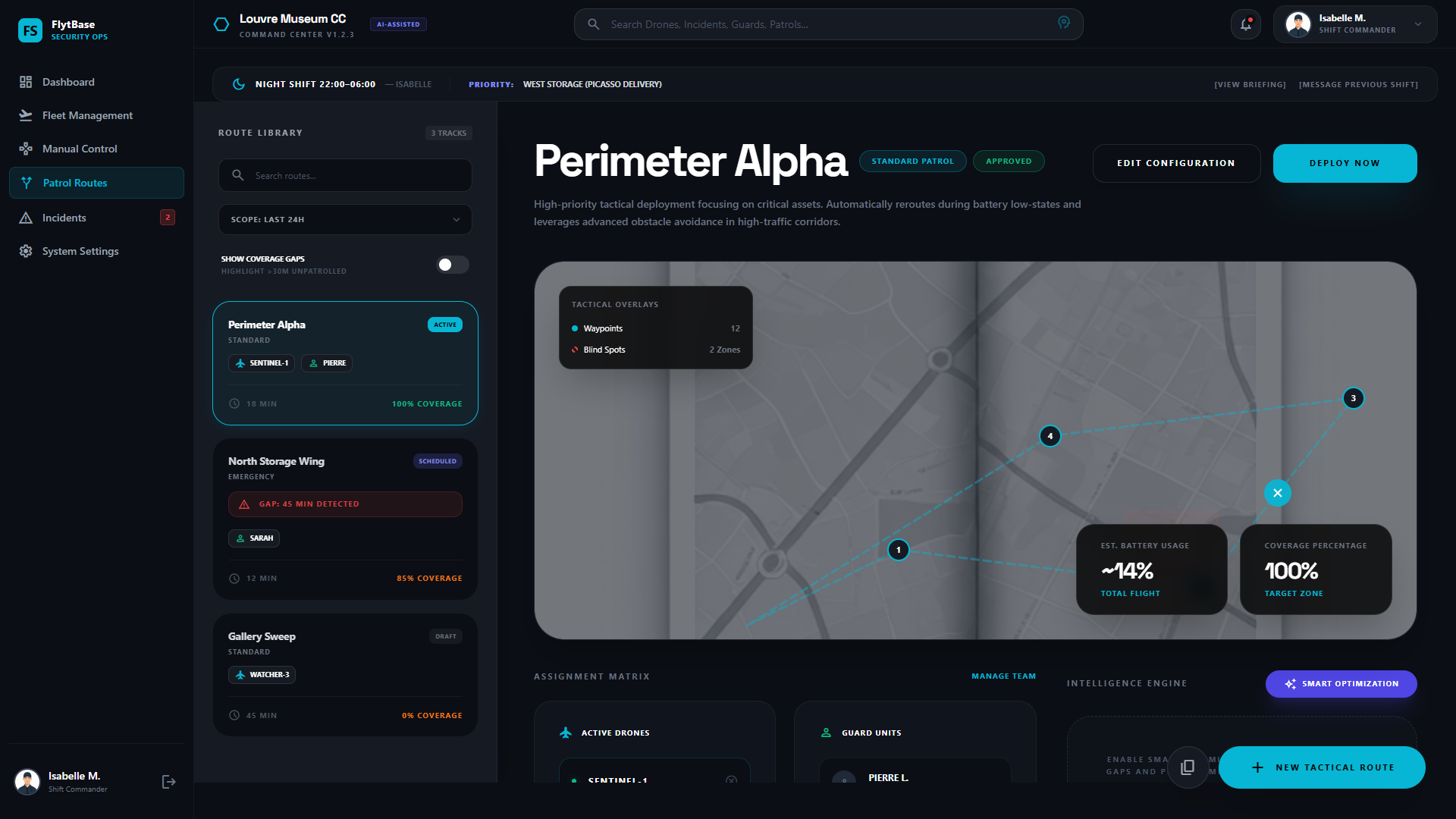
Autonomous route library
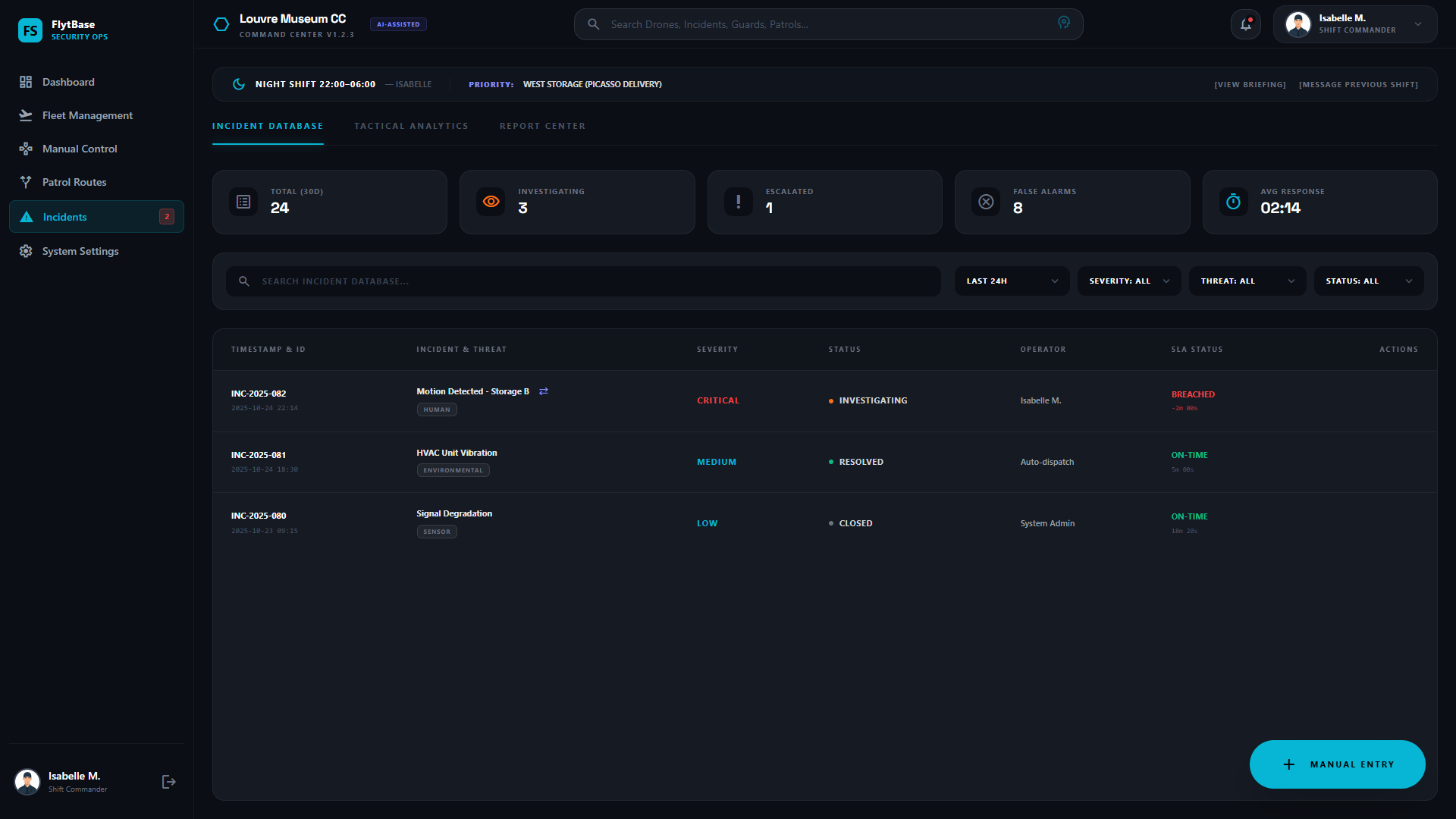
Historical forensic logs
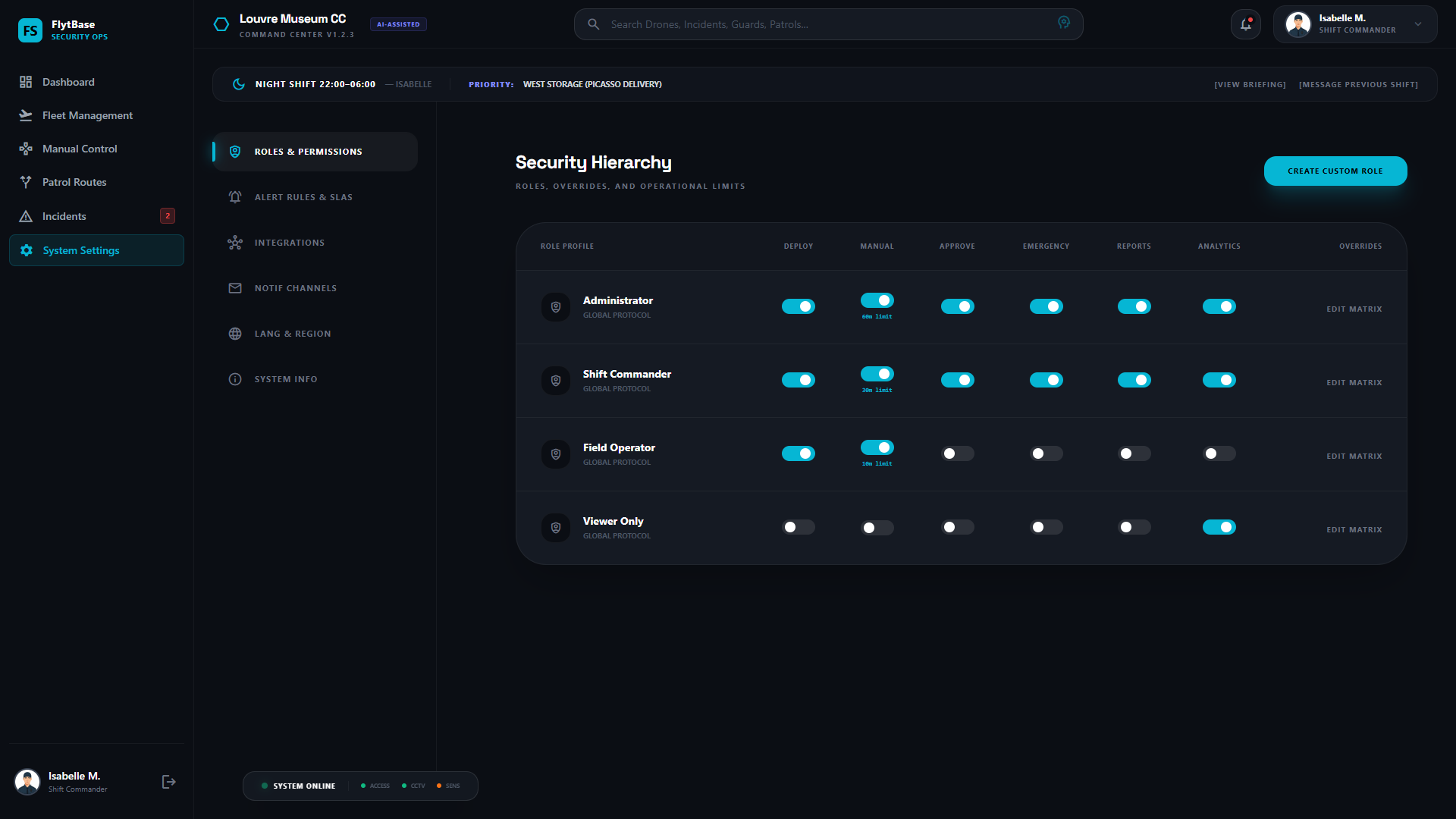
Zones & SLA thresholds
All major user flows — from alert triage to shift handover, drone dispatch to manual override — are mapped across the Dashboard as the central hub. The flowchart covers 8 distinct flow groups including: alert management, drone patrol, manual control, multi-incident mode, shift briefing, fleet management, settings, and escalation paths.
AI was used as a deliberate collaborator at every stage — to accelerate reasoning and validate persona flows.
Perplexity
Deep analysis of the brief — extracted museum context, constraints, and all 4 persona pain points
Perplexity + ChatGPT
Problem framing — grouped issues into 3 gaps: decision support, multi-incident prioritisation, context persistence
ChatGPT + Perplexity
Information architecture — wrote textual user flow descriptions before any visual structure
Eraser.io → FigJam
Flowchart — translated text flows into structured nodes, then iterated and annotated in FigJam
ChatGPT
Flow validation — checked every step against each persona; led to making shift briefing mandatory
AI + Gemini Dynamic View
Feature lists per screen; visual layout exploration for alert cards, multi-incident view, shift briefing
Stitch + Google AI Studio
Mockup refinement for UI consistency; built interactive prototype simulating 2:37–2:47 AM scenario
Perplexity + ChatGPT
Prototype stress-testing — verified every pain point was addressed; identified gaps in drone readiness cues
Every design decision involved a trade-off. We prioritised operational safety over conventional feature richness.
Decision 01
Clarity over complexity
Instead of: Decorative data visualizations
A calm, legible hierarchy outperforms impressive charts during 2 AM crisis mode.
Decision 02
Human-in-the-loop
Instead of: Full automation dispatch
Accountability cannot be delegated to models in high-stakes security.
The system transforms museum security from reactive to proactive, reducing incident response time by an estimated 40%.
40%
Reduction
Response time
6
Simultaneous
Active Drones
100%
Automated
Forensic Trails
24/7
Full Rotation
Reliability
Previous Project
Samsung PRISMNext Project
GuruVR Metaversity